How Handmade Rugs Are Made: From Yarn to Finished Masterpiece
- Palash
- Apr 21
- 6 min read
Handmade rugs are prized for their beauty, durability, and the skill involved in their creation. Understanding how handmade rugs are made reveals why these pieces command premium prices and hold a special place in homes and design projects worldwide. This post explores the detailed process from raw yarn to the finished masterpiece, highlighting the craftsmanship that makes each rug unique.
Selecting and Preparing the Yarn
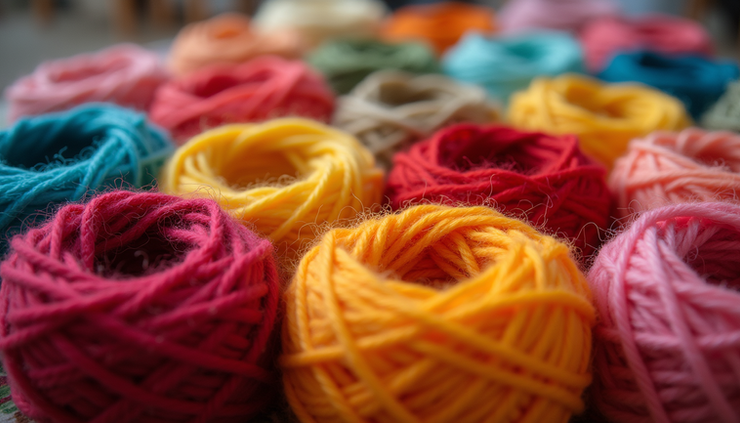
The journey of a handmade rug begins with the careful selection of yarn — a foundation that defines its durability, texture, and visual appeal. Most handmade rugs are crafted using natural fibers such as wool, silk, and cotton. Wool is widely preferred for its resilience and softness, while silk is valued for its natural sheen and ability to highlight intricate details. Cotton is typically used as the foundation material, providing strength and structure to the rug.
The preparation of yarn involves several meticulous steps:
Shearing and Cleaning: Wool is sheared from sheep and thoroughly cleaned to remove dirt, grease, and impurities.
Carding: The cleaned fibers are carded to align them uniformly, ensuring consistency in texture and strength.
Spinning: The fibers are then spun into yarn, with thickness carefully controlled based on the desired texture and design of the rug.
Dyeing: The spun yarn is dyed using either natural or synthetic dyes. Traditional handmade rugs often use natural dyes derived from plants and minerals, known for their rich tones and graceful aging over time.
This stage plays a crucial role in defining the rug’s color palette, texture, and overall character, forming the essential first step in understanding how handmade rugs are made.
Designing and Mapping the Pattern
Before weaving begins, the rug’s design is meticulously conceptualized. This may be a traditional motif passed down through generations or a bespoke creation tailored to a specific client or interior space.
Designers translate the concept into a detailed blueprint, often using graph paper or traditional coding systems such as talim, where each square represents a knot and is assigned a specific color. This structured mapping serves as a precise guide for the weavers, ensuring accuracy, balance, and consistency throughout the weaving process.
For custom rugs, the design phase becomes a collaborative journey. Designers work closely with clients and interior designers to refine elements such as pattern, color palette, texture, and dimensions, ensuring the final piece harmonizes perfectly with its intended environment.
This stage transforms an idea into a visual language that artisans can interpret, laying the foundation for a rug that is not just functional, but a true work of art.
Loom Setup and Warping
Before the weaving process begins, the loom must be carefully prepared — a foundational step that determines the rug’s structure, strength, and precision.
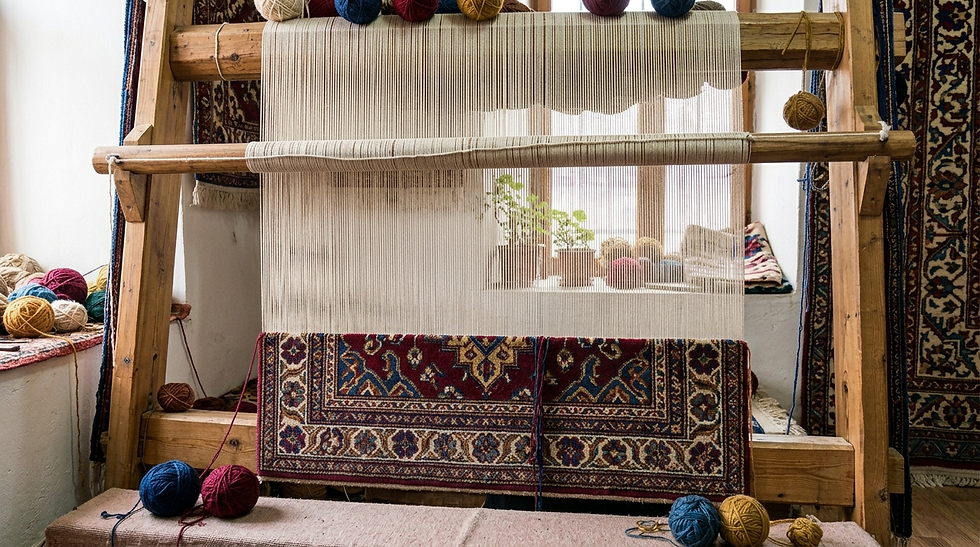
The process starts with warping, where strong cotton yarns are stretched vertically on the loom to create the warp threads. These threads form the backbone of the rug, providing the structural framework onto which the design is built. The number of warp threads and their spacing are precisely calculated based on the rug’s size, density, and weaving technique.
Setting up the loom requires a high level of skill and accuracy. Artisans ensure that the tension of the warp threads is perfectly balanced — too tight or too loose can affect the rug’s shape and durability. This step also defines the rug’s width and ensures that the edges remain straight and uniform throughout the weaving process.
Depending on the type of rug, different looms may be used, such as vertical looms for hand-knotted rugs or horizontal looms for certain flat woven styles. Once the loom is fully set and the warp threads are in place, the foundation is ready for the intricate weaving work to begin.
Though often unseen in the final product, loom setup and warping play a crucial role in ensuring that the rug maintains its form, strength, and longevity over time.
Weaving the Rug
Weaving is the heart of the handmade rug-making process — a stage where raw materials are transformed into intricate works of art through patience, precision, and exceptional skill.
Artisans work on traditional looms, carefully constructing the rug by hand using one of several techniques:
Hand Knotting: The most intricate and time-intensive method, where individual knots are tied around the warp threads and secured with weft threads. The density of these knots, measured in KPSI (knots per square inch), determines the rug’s level of detail, texture, and durability. Finer rugs feature higher knot densities, allowing for more complex and refined designs.
Hand Tufting: In this technique, yarn is inserted into a stretched backing fabric using a tufting tool. It allows for faster production while still achieving detailed patterns and a plush texture, making it ideal for contemporary designs.
Hand Loom (Handwoven): These rugs are woven directly on a loom by interlacing yarns to create cut or loop piles without the use of knots. Hand loom rugs are known for their uniform texture, subtle patterns, and modern aesthetic, offering a balance between craftsmanship and efficiency.
Flat weaving: This technique involves interlacing warp and weft threads without forming knots or pile, resulting in a lightweight, flat surface. Kilims are among the most well-known examples of flat woven rugs.
Weavers often spend hours each day at the loom, following the design blueprint with remarkable precision. Depending on the technique and complexity, a single rug can take weeks or even months to complete.
This slow and meticulous process is what gives handmade rugs their distinctive character, durability, and timeless appeal.
Finishing Touches and Quality Control
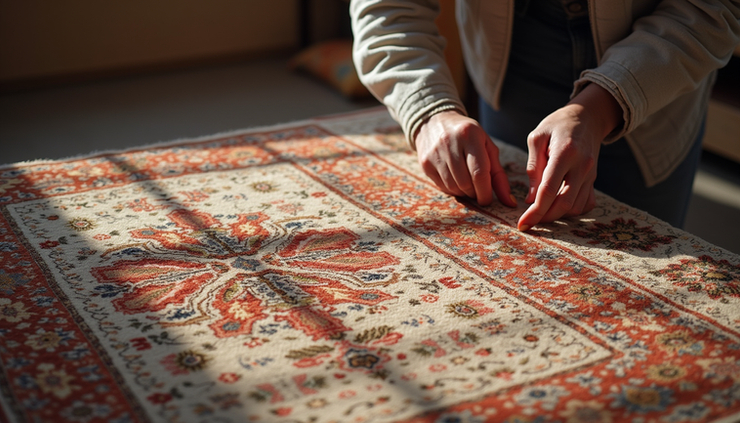
Once the weaving is complete, the rug enters the finishing stage — a series of meticulous processes that refine its appearance, enhance its texture, and ensure lasting durability.
Clipping and Trimming: The pile is carefully trimmed to achieve an even surface. In finer rugs, artisans also perform detailed carving or embossing to accentuate patterns and add depth to the design.
Washing: The rug is thoroughly washed to remove impurities and excess dye. This process also enhances the texture, softens the fibers, and brings out the richness of the colors. Depending on the technique, washing can create a subtle sheen or a more vintage, muted finish.
Stretching and Drying: The rug is stretched on a frame to restore its precise dimensions and ensure structural stability. It is then dried under controlled conditions to preserve its shape and integrity.
Latexing and Backing (for Hand-Tufted Rugs): In tufted rugs, a layer of latex is applied to secure the fibers, followed by a backing fabric that adds strength and durability.
Final Inspection: Each rug undergoes a detailed quality check, where skilled inspectors examine knot consistency, color accuracy, finishing, and overall craftsmanship to ensure it meets the highest standards.
These finishing touches transform the rug into a refined, ready-to-use piece, ensuring it not only looks exceptional but also retains its beauty and durability for decades — a true reflection of handmade craftsmanship.
Why Handmade Rugs Are Worth the Investment
Understanding how handmade rugs are made highlights the time, skill, and materials involved. Each rug is a labor-intensive creation, often involving multiple artisans. The use of natural fibers and dyes, combined with traditional techniques, results in a product that improves with age.
For premium home buyers, handmade rugs offer:
Unique designs that cannot be replicated by machines.
Durability that withstands years of use.
A story and connection to the artisans and culture behind the rug.
Interior designers and architects appreciate the custom options and textures that elevate a space. International buyers value the authenticity and craftsmanship, especially when sourcing from renowned rug-making regions like India.
Final Thoughts
The process of making a handmade rug is a blend of art, tradition, and skill. From selecting the finest yarn to the final inspection, every step contributes to a rug’s beauty and longevity. Knowing how handmade rugs are made helps buyers understand their value beyond aesthetics.
If you are considering a handmade rug for your home or project, look for quality materials, knot density, and craftsmanship details. These factors ensure you invest in a piece that will enhance your space and last for generations.